This is the second of a two-part series about NIL and the transfer portal. Today’s focus is on Division III wrestlers. Read Part 1 here.
There are 443 wrestlers in the transfer portal as of May 14, 2024. 31 of those are Division III wrestlers, and two of the 31 were 2024 NCAA qualifiers. Compared to Division I, there are very few Division III wrestlers using the portal. One of the reasons for this is that DIII athletes have other options than the portal to talk to other schools. These three options are as follows:
Fill out the DIII self-release form if the athlete wants to talk to another DIII school.
Get a letter from the current school granting permission to speak with other schools.
Withdraw from school, as unenrolled DIII athletes do not need permission to talk to other schools.
Another reason that there are fewer DIII athletes in the portal is that there are very few opportunities for Division III wrestlers to earn NIL money. There are not as many big money donors looking to buy athletes at the Division III level, so there is rarely a financial incentive for a successful DIII wrestler to transfer to another DIII school. This could change as NIL rules are clarified and DIII schools ramp up fundraising in the NIL era. Several Division III schools have collectives supporting them, but the numbers are small and often focused on a single sport (like Marietta Basketball’s Two Rivers Trust).
Wrestling is also different than some other sports in portal usage. There are over 1,100 DIII football players in the portal as of May 14th. That means there are 37 times as many football players in the portal even though there are only about 7.5 times as many football players as wrestlers overall in Division III. The ratio in men’s basketball is even greater with 21 times as many players as wrestlers in the portal even though there are only about 2.5 times as many basketball players.
Why are there so many more basketball and football players in the portal? One reason is playing time. With multiple entry tournaments and multi-dual events, most Division III wrestlers get to compete, no matter how far down they are on the depth chart. The fourth string 141 might wrestle 15+ matches while the fourth string right guard never gets in a game. Also, wrestling teams often have wrestle-offs where the athletes determine who starts with direct competition. In other sports, the coach decides who plays, and many players on the football and basketball bench are sure they would be playing more if the coach were smarter. The other reason for the number of basketball and football portal entries is the attention the portal gets in the media in those sports. Something like 40% of Division I basketball players are or were in the portal this year. Division III athletes see countless stories about transfer athletes and decide to give the portal a try. Many of them are holding onto the belief that a DI or DII scholarship is a possibility, even though they lack the stats or game video to warrant that level of attention.
Division III wrestlers will enter the portal for several reasons. Their current school may be a poor fit, the coach may be leaving, the school may be closing, or they feel like they will have a better chance to get in the lineup at a new school. Regardless of the reason for leaving, almost any wrestler, regardless of past results, will be contacted after entering his name in the portal. Small private colleges are looking to add students, and a name in the portal is a student who has already proven that he wants to wrestle, wants to continue in college, and understands the costs of attending college. Since there are no athletic scholarships and wrestling teams rarely have a roster limit, coaches do not risk using scarce resources on a wrestler, and the school gets another tuition-paying student.
As we head deeper into the portal era, Division III wrestlers will likely increase their usage of it rather than rely on the previous, but still valid, methods described at the beginning of the article. Coaches will continue to keep a close eye on the portal to contact both current Division III athletes as well as Division I and II athletes that may be willing to change divisions to find a better fit. The sport is still a ways away from NIL money having a major influence on freshman and transfer enrollment, but that day may be coming as schools increase their competition for students and find creative ways to supplement their rosters.
Assistant Wrestling Coach (9 month appointment): The Assistant Coach will assist in the management of daily operations of Division III intercollegiate wrestling program competing in the Wisconsin Intercollegiate Athletic Conference, with responsibilities including, but not limited to, assisting in the planning, recruiting, coaching, developing, implementing, and administering of the wrestling program to meet University and Department objectives. They will also be responsible for various administrative tasks associated with running an intercollegiate wrestling program, potentially including, but not limited to, the planning of team travel; managing equipment and/or video and technology needs; and coordinating camps. The Assistant Coach must conduct themselves in such a way as to enhance respect for the university, the Department, UWL wrestling program and UWL student-athletes.
Mitchell Hall Facilities Coordinator(12 month appointment): The Mitchell Hall Facilities Coordinator is an essential member of the Athletics department staff as they will administer all aspects of managing the Mitchell Hall. Including, but not limited to, serving as the building liaison for any maintenance, custodial, key access, assist with hosting of assigned external events, overseeing the day-to-day schedule of all spaces inside Mitchell Hall, managing the equipment room and staff as well as assisting the Assistant Athletic Director for Facilities & Events with the scheduling and training of Facilities Manager staff. This position requires that the Mitchell Hall Facilities Coordinator to effectively communicate with all staff members to create a collaborative working space for all end users including, but not limited to, Athletics, Exercise and Sport Science, Recreational Sports Department, other campus users and external groups.
Required Qualifications • Bachelor’s Degree • Wrestling coaching or playing experience at high school, club, or collegiate level. • Possess a valid driver’s license. • Strong interpersonal and communication skills. • Ability to foster a cooperative work environment.
Preferred Qualifications • Knowledge of NCAA Division III and WIAC rules. • One to three years experience in faculties management • Experience working with diverse populations. • Collegiate coaching or playing experience. • Collegiate recruiting experience. • Self-directed
This is the first of a two-part series about transferring in college wrestling. The first article is about the transfer portal and NIL compensation for college wrestlers. Coming later is a shorter article about the portal and Division III wrestling.
Two main stories have dominated wrestling news and social media this spring (I started writing this before David Taylor became the Oklahoma State coach). One is last month’s Olympic Trials and the upcoming Paris Games. The other is the NCAA Transfer Portal and its connection to Name, Image, and Likeness (NIL) compensation for college athletes.
Penn State, Michigan, and Iowa finished in 1st, 3rd, and 5th place at the NCAA Division I Championships in March. Each team sent four wrestlers to the tournament who transferred into the school. Nine of those twelve athletes had become All-Americans before transferring. Three recent NCAA changes helped facilitate these moves and those of other athletes in the last few years.
Loosened transfer regulations and the transfer portal – Division I athletes, until the advent of the transfer portal, had to request permission to speak to another school about transferring, and the current school had the right to refuse permission. Since the transfer portal went into operation, schools were required to place an athlete in the portal if he asked. The portal is a database of athletes available to anyone at an NCAA school with access. A wrestler can signal his desire to transfer to the entire NCAA just by having his name in the portal.
An additional year of eligibility due to COVID-19 – Wrestlers could compete in the 2020-2021 season without using a season of eligibility, so anyone who wrestled that season has the opportunity for a fifth year of competition. That group is just about through college, and a good number of the recent transfers have been attending graduate school. Except for anyone with a medical redshirt year, the 2024-2025 season should be the last opportunity to compete for the majority of fifth year wrestlers.
Name, image, and likeness compensation – College athletes can now receive compensation for their name, image, and likeness, an opportunity that was denied them until 2021. Wrestlers may decide to transfer with the hope of receiving NIL payments at their new schools. More on this below.
State laws vary surrounding NIL, and the NCAA rules and enforcement have been uneven and subject to multiple lawsuits. Regardless of laws or NCAA regulations, an athlete must provide something in exchange for NIL compensation. This has included social media posts, attendance at events, autographs, and other activities. The deals fall under two main categories. The first category encompasses endorsement deals. An athlete promotes a business in exchange for payment. Former Iowa women’s basketball player Caitlin Clark’s relationship with State Farm is a high-profile example of this first category of NIL compensation.
The second category of NIL compensation is much closer to a pay-for-play arrangement. Groups of donors, typically called NIL collectives, pool resources to pay athletes who attend the school supported by the collective. These organizations are not run by the schools and are separate from the athletic department, though there is a close relationship. If you see a report of an athlete being paid some amount of money to transfer, that money usually comes from a collective. In exchange for giving money to the collective, donors get access to certain perks that often include access to content and events featuring current athletes. The collective pays the athletes in exchange for creating digital content and attending these events.
The combination of the transfer portal and NIL compensation has created an environment where athletes have an incentive to enter the transfer portal and negotiate with schools through NIL collectives to secure large payments. Athletes leverage their success into dollars, while colleges compete to lure wrestlers who have already shown they can win at the college level.
Before the change in transfer and compensation rules, athletes had very little leverage, while the schools held almost all the power. An 18-year-old would commit to a school, it was difficult to leave, and scholarships were only guaranteed one year at a time (in most cases). Additionally, the athlete had no opportunity to earn money beyond a scholarship. Many athletes playing sports other than basketball and football are on partial scholarships, so they are paying some amount out of pocket to attend and play sports. For the first time, there is something like a market for talent where athletes can benefit financially from competition for their services.
The method by which athletes are getting paid is inefficient, opaque, and ripe for exploitation on both sides. Since schools cannot directly pay athletes as employees, donors and collectives step into the gap and provide the funds. If you read a poorly-sourced tweet about a wrestler being offered $200,000 to transfer to your favorite DI school, that money would come from donors who are working closely with the coaches and may also be directly involved in recruiting. This makes some people uncomfortable! From the fan perspective, it is no fun to root for a wrestler who does well only to have him leave for a school with deeper-pocketed boosters.
Prior to NIL and the portal, this sort of thing rarely happened. If a second-tier wrestling team recruited and developed an All-American, he almost always stayed for his whole career. What are the odds that a school like Edinboro, a Division II school with Division I wrestling, could now have consecutive top-five NCAA finishes like they did in 2014 and 2015? There is a good chance that at least one All-American might want to test the transfer waters in hopes of a five or six-figure payday.
Is the portal and NIL a net negative for college wrestling? It probably depends on your perspective and rooting interests. Some hyperbolically state that the portal will result in the death of college wrestling. Others limit their concerns to the fortunes of teams with fewer resources to devote to the sport. Still others can voice their misgivings while also expressing the view that wrestlers ought to have the ability to earn money in proportion to their abilities.
There are two questions that anyone having an opinion should be able to answer before arguing a side. What restrictions should be placed on athletes, and are those restrictions legally, morally, and ethically defensible? Many arguments against NIL and portal start out like this: It is good that athletes can be paid but… On the other side of that but is usually an idea that would limit athlete choice, earning power, or both. It is not unreasonable to advocate for some level of restriction on athlete movement or compensation in hopes of promoting other ideas like fairness, wrestling program health, or protecting athletes from exploitation by more sophisticated coaches, agents, or collectives. However, it is important to ensure that restrictions in the name of protection do not unreasonably limit a wrestler’ opportunity to benefit financially from his athletic ability during a short competitive career.
There are two kinds of wrestling programs that could lose out in the portal era. The first is the type that is getting the most attention now—a college in non-power conferences that loses an All-American-caliber wrestler to a higher-resourced school. This has not happened many times, especially if graduate transfers and wrestlers transferring after a coaching change are removed from the list. These schools are not typically in contention for a national championship trophy, and, while losing an elite athlete hurts, the teams should still be able to continue to compete for conference honors and to send wrestlers to the NCAA tournament. This was true before NIL and will continue to be so in the future. NIL and the portal have not materially changed the pecking order of NCAA wrestler (or any other sport). Ohio is not chasing down Ohio State anytime soon, no matter what the transfer rules say or how much wrestlers get paid.
The other type of school that could be hurt by NIL and the portal are power conference schools that cannot keep up with others in their conference. If your school lacks enough rich donors to pay wrestlers, your team will fall further behind. When Iowa, Penn State, and Ohio State can pay to attract and retain talent, they can open up an even bigger gap on Indiana, Purdue, and Northwestern in the Big Ten. If care about parity in wrestling, this is the area on which to focus. Ohio does not need to catch Ohio State to have a healthy program. They can focus on Central Michigan, Northern Illinois, and Lock Haven while also working to get guys on the podium in March. If NIL and the portal keeps Maryland and Michigan State from getting closer to the top, that may one day affect the competitiveness of the national tournament.
Despite the handwringing surrounding this issue, nothing about the portal era has changed the national championship picture. Parity has never been part of modern NCAA Division I wrestling. In the past 30 years, just five teams have won the NCAA team title, and four others have placed second without winning in that time span. High-resource teams win the most. This has been true as long as there has been college wrestling. The top ten at the 2024 NCAA Championships looks a lot like the top ten at the 2014 tournament which looks a lot like the top ten at the 2004 tournament. The transfer portal has not meaningfully changed who can compete for a championship. Will fans really give up on supporting a team because the chance to win a team title is slightly worse than it was before? If you were going to drive 500 miles to the beach for vacation, would you cancel the trip if you instead had to go 510 miles?
The portal and NIL do not make up a perfect system, but, barring congressional action, it is the system that exists. Athletes get freedom, money, and the risks that go along with both. Recruiting and retention is more stressful for coaches who now must also manage a “payroll” effectively controlled by someone else (donors). Fans still can watch and cheer for high-level wrestling. I think that wrestling will be OK, and the product on the mat will be as good as it ever was. College wrestling, and college sports in general, will continue to change as they have since 1934 when Oklahoma State won the first official NCAA team title. Some things stay the same, however. Ninety years after that first NCAA championship, Oklahoma State is dominating the current news cycle with the announcement of David Taylor as their next head coach.
The National Wrestling Coaches Association has announced the 2024 inductees into the Division III Hall of Fame. Three wrestlers headline the class that also includes a pair of officials, a contributor, and a coach. Wrestlers honored include three-time NCAA champions Nazar Kulchytskyy of UW-Oshkosh and Byron Tate of Wartburg along with four-time finalist and two-time NCAA champion Lucas Malmberg of Messiah. Dave Malecek, who has coached UW-La Crosse to eight top-four finishes, will be inducted as will officials Rick Stahl and Rick Cole. Finally, Dave Miller, associated with Wabash, will be inducted as a contributor.
The induction ceremony will take place as part of the 2024 NWCA Convention at the Sawgrass Marriott Golf Resort and Spa on July 26th. Tickets can be purchased here.
Read more about the inductees accomplishments at the article linked below.
Penn State Altoona has announced Pennsylvania native Tyshawn White as head coach for their reborn wrestling team. The Lions will return to the mat this fall for the first time since the 1980s. White spent last season as an assistant coach at Division II Chadron State in Nebraska and had previously coached for a season at Messiah University. Chadron State won the RMAC championship in 2024 and sent a pair of wrestlers to the NCAA Championships.
White finished up his wrestling career with one season at Shippensburg in 2022 where he finished 2nd in the NCAA Division II Championships at 125 lbs. He also wrestled for Lock Haven, Clarion, and Glenville State. He graduate from Lock Haven with a degree in Criminal Justice and is currently working on a Master’s degree in Sports Management at Chadron State. He will also coach the women’s team at Penn State Altoona.
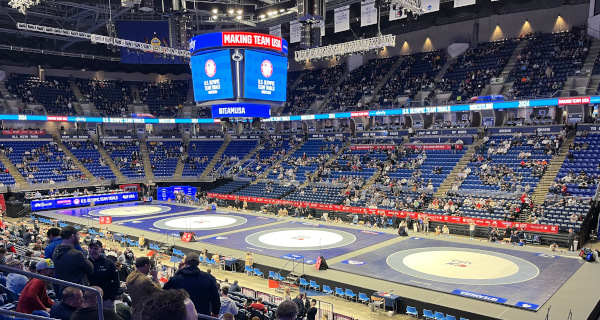
Five former Division III wrestlers competed in Greco-Roman at the 2024 Olympic Trials held this past weekend at Penn State. 2013 NCAA Champion Joe Rau was the top finisher, winning his weight class and earning a spot in the Olympic Games this summer. Read more about Rau’s tournament here. Four other DIII wrestlers competed alongside Rau at the event including those listed below.
60kg – Brady Koontz, University of Dubuque – Koontz wrestled for Team USA in the 2023 World Championships down at 55kg, but he moved up to the Olympic weight of 60kg this past weekend. He lost both his two matches 4-2 and 5-2. Koontz finished up his college career this past season with a 5th place finish at the Lower Midwest regional and placed 7th at the 2023 NCAA tournament. He had transferred to Dubuque from Ohio State.
87kg – Ryan Epps, Augsburg University – Epps opened his tournament with a 5-3 victory before falling to top seeded Mahmoud Sebie in the quarterfinals. He did not return for the consolation bouts. Epps was a two-time NCAA champion for Augsburg and was seeded second at the canceled 2020 championships.
87kg – Richard Carlson, University of Wisconsin-La Crosse – Carlson was the #2 seed at 87kg. His opening match came against Payton Jacobson. Jacobson won 4-0 and then went on to win the whole thing and earn a spot on the 2024 Olympic team. Carlson did not compete on the back side. He was a two-time All-American finishing 6th in 2015 and 5th in 2017.
130kg – Donny Longendyke, Augsburg University – Longendyke was the 4th seed and opened his tournament with a 5-3 win over the 5th seed Jeremiah Imonode. He fell 9-0 to the eventual champion Adam Coon but bounced back to win 9-0 in the consolation finals, also against Imonode. That put him in a true third match with Aden Attao, but he came up on the short end of a 4-2 decision. His fourth place finish puts Longendyke on the national team.
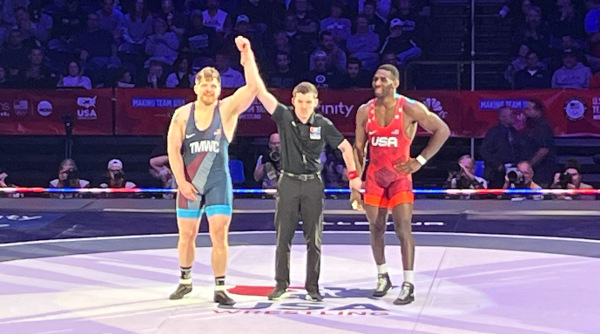
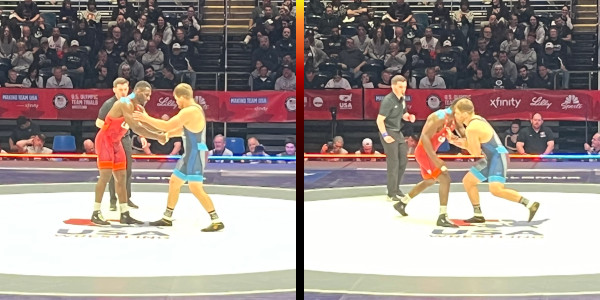
Joe Rau has made the 2024 U.S. Olympic team as the representative at 97kg in Greco-Roman wrestling. The former Elmhurst national champion and three-time All-American defeated Alan Vera two matches to one in the final series at the Bryce Jordan Center in Pennsylvania on Saturday night. Rau had lost both of his matches with Vera prior to the trials and also lost the first match of the finals 7-1, putting him on the precipice of missing a chance to wrestle in Paris. He proceeded to win the second match 6-0 to set up the deciding match. Rau got off to a quick start in round three and ultimately ended the match with an 8-0 technical superiority victory. View his trials clinching match here on Youtube.
Vera was waiting in the finals for Rau after qualifying the weight for Paris at the Pan Am Olympic qualifier. Rau was the top seed in the challenge tournament that began on Friday morning. He opened the Trials with a 7-0 victory over Brandon Marshall (see more about Marshall’s return to wrestling after a seven year hiatus that included med school). In the quarterfinals, Rau won 5-1 over former Utah Valley and Ohio State wrestler Tate Orndorff before taking on another former Buckeye Nicholas Boykin in the finals. He prevailed 5-3 to get his shot at Vera.
This was not the first time Rau won the Olympic Trials, but it will be his first trip to the Olympics. In 2016, he won the trials at 98kg, but the United States had not yet qualified the weight. He traveled to the final Olympic qualifying tournament but came up short. In 2021, he was again in the trials finals, this time at 87kg. He had a bye in to the finals but lost a pair of matches to John Stefanowicz. After the bouts, one of which featured a controversial call, Rau left his shoes on the mat, signifying his retirement from wrestling.
He found his way back to the sport and even wrestled some freestyle along the way before returning to his best style. In 2023, Rau earned a spot on the world team and competed in the UWW World Championships for the third time, having also made the team in 2014 and 2019. He heads to Paris this summer to compete for an Olympic medal for the first time. Other top names likely to be in the bracket include 2023 world champion Gabriel Rosillo of Cuba and 10x world and Olympic medalist Artur Aleksanyan of Armenia. Rau will begin his Olympic tournament on Tuesday, August 6th in the Grand Palais Éphémère.
The 2024 d3wrestle.com Wrestler of the Year is Joziah Fry of Johnson & Wales University. Fry repeated as NCAA champion at 125 lbs. and was clearly the class of the field at that weight. He stormed to the finals with three consecutive tech falls, spending less time on the mat in each match than the one before. In the finals, he prevailed with an 18-8 major decision, leading the Wildcats to a 4th place team finish. He ended the season with a 36-1 record, 5 falls, 17 tech falls, and 4 major decisions. His only loss of the season came in the opening weekend to Lehigh’s Luke Stanich, the eventual 5th place finisher in the Division I championships.
Fry opened the season with a runner-up finish at the Princeton Open, after which he reeled off 33 consecutive wins. Along the way, he won the York New Standard Corporation Invitational championship and helped the team finish 6th at the NWCA National Duals. He spent the middle portion of the season at 133 lbs., picking up 17 of his wins at that weight. Among his victories at 133 was a 12-8 decision over Chase Randall of Coast Guard, the eventual NCAA champion at 133 lbs. Only one Division III wrestler was able to avoid surrendering bonus points to Fry this year at 125 lbs. Throughout the regular season and postseason, Fry defeated 10 different wrestlers who appeared in the NCAA tournament at 125 or 133, six of whom ended up on the podium in March.
In Fry’s two seasons at JWU, he has compiled a 79-1 record, two NCAA titles, and two Northeast Regional titles. The Rhode Island native begin his college career at Campbell University where he redshirted in 2020-2021 and competed in 2021-2022 before returning to his home state to join Johnson & Wales. Next season, he will be aiming for his third NCAA title in front of a home crowd, as Johnson & Wales will be hosting the 2025 NCAA Championships in Providence. Fry is the first wrestler from JWU to win this award and the first from the Northeast Region.
Johns Hopkins University has taken the top spot in the team GPA competition, the National Wrestling Coaches Association announced today. They edged 2nd place Heidelberg and 3rd place Ohio Northern for the victory. We should all hope their celebratory video matches previous efforts.
Additionally, 418 wrestlers from 100 schools earned NWCA Scholar All-American Honors for 2024. Augsburg, Chicago, Coast Guard, UW-La Crosse, NYU, Stevens, and UW-Eau Claire each had 10 or more wrestlers honored. In order to be recognized, a wrestler must have at least a 3.2 GPA and either place in the regional tournament or have at 66% or greater winning percentage in a season with at least 15 matches.
Overview: Is responsible for assisting in the overall management of the College’s men’s and women’s wrestling programs including coaching, recruitment and retention of student-athletes, scheduling and budget management, equipment ordering, scheduling contests, viable fundraising, public relations, and other duties.
Job Duties:
Work under the direction of the Head Wrestling Coach to conduct and evaluate practice activities for designated team members. Provide group and individual assistance in a manner that engages the student-athletes and builds commitment to the program.
Work collaboratively with the Head Wrestling Coach to integrate efforts and create program success. Assist other staff members with activities as needed to reach the goals of the team.
Meet with prospective students and their family members both on campus and at remote locations. Provide advice and counsel on the admissions process, the Augustana experience and the integral role of the student-athlete in overall campus life.
Align and promote the core principals and standards of the program at all times.
Manage a diverse set of responsibilities including but not limited to assisting with travel arrangements, team travel meals, home event operations, and other duties as assigned in relation to team operations.
Provide feedback to assigned staff members and student workers on work performance and overall effectiveness.
Create teaching curriculums for physical education activity courses as assigned during the academic year. Find ways to engage students in learning activities.
Other duties as assigned.
Requirements:
Education: Bachelor’s degree required, Master’s degree preferred in a related field.
Skills & Experience:
Three or more years experience in a coaching role, preferably at the small college level.
Ability to understand and comply with a variety of regulations from the NCAA, CCIW as well as other regulatory bodies.
Excellent oral and written communication skills.
Ability to interact with a diverse group of coaches, administrators, student athletes, prospective students and families and other members of the campus community.
Strong prioritization and organizational skills.
Must have a thorough understanding of and accountability to NCAA and CCIW rules and regulations. Strong commitment to the academic and athletic success of the student-athlete.
Landon Williams, previously the top assistant at Wartburg, has succeeded Eric Van Kley as head coach at Central College, the Pella, Iowa, school announced yesterday. The Iowa native was three-time All-American and two-time NCAA champion at Wartburg. Van Kley remains at Central as Vice President for Athletics and remarked on the hiring of Williams, “Landon’s own personal experience and passion for the Division III model is something we really prioritize and value at Central. He’s competed in Division III, he’s coached in Division III, he understands what we’re about and that is focusing on the student-athlete experience, helping them be successful in all aspects of life both in college and beyond. But, yes, beyond that, he’s a tenacious recruiter and a phenomenal developer of talent on the mat. I’ve seen him operate in a variety of settings and have always come away impressed. Every coach and reference I spoke with about him raved about his ability to teach, develop and build relationships.”
Here are the eight finalists for the 2024 d3wrestle.com Wrestler of the Year. Each was a 2024 NCAA Champion and did not lose to a Division III opponent this season. The d3wrestle.com Wrestler of the Year will be revealed later this week.
Today, Ferrum College announced plans to move to Division II for the 2025-2026 school year, and the Virginia school has accepted an invitation to join Conference Carolinas. Ferrum currently competes in the ODAC and will do so for one more season. The Panthers sent a pair of wrestlers to the NCAA Championships last month and will compete one more time as a member of Division III. Ferrum has had five NCAA All-Americans and two NWCA All-Americans since restarting the team for the 2013-2014 season.
The 2024 d3wrestle.com Coach of the Year is Tim Fader of UW-Eau Claire. Fader coached the Blugolds to the best season in the 64-year history of the program in 2023-2024. UW-Eau Claire had a school-record four All-Americans at this year’s NCAA Championships on the way to a 5th place team finish. Jared Stricker became the second NCAA champion in school history and the first since 2006.
During the regular season, UW-Eau Claire won 19 duals, the highest in school history. The team also tied with UW-La Crosse for the team title at the WIAC Championships, giving UW-Eau Claire its first ever conference championship in wrestling. Three Blugolds won WIAC titles at the event. Stricker was named Co-Wrestler of the Year in the conference and also set the career wins record at UW-Eau Claire.
The 2023-2024 season was Fader’s ninth in Eau Claire. Previously, he had been the head coach for ten years at UW-Whitewater and six years at UW-La Crosse. He has been named the WIAC Coach of the Year four times in his career. This season, he was also named The Open Mat Division III Coach of the Year. This is Fader’s second time winning the d3wrestle.com Coach of the Year award, as he was also recognized in 2014 when he led UW-Whitewater to an NCAA runner-up finish.
Gino Frank has resigned as head coach at Gettysburg College after four years as head coach and 13 as an assistant at the school. In his 17 years on staff, he helped Gettysburg produce four All-Americans, 12 national qualifiers, 23 Scholar All-Americans, 11 Centennial Conference champions and 61 conference placewinners. Over the past four seasons, he coached two Centennial Conference Championships Outstanding Wrestlers. In 2023, Luke Kowalski became the first All-American at Gettysburg since 2016 after qualifying for the tournament in 2022.
Replacing Frank is Brad Brosius. Brosius spent the past three seasons as an assistant on the Gettysburg staff. He has more than 30 years of coaching experience at the junior high, high school, and college levels and is a USA Wrestling Silver Certified coach. He has competed in five Masters world championships and was a bronze medalist at the 2009 Master’s U.S. Open.
Executive Director of Intercollegiate Athletics and Campus Recreation Mike Mattia said of Brosius, “I am excited for the wrestling program to have Brad as its next head coach. Not only does he have a wealth of wrestling coaching experience but he also has been a great mentor to the team both on and off the mat. I am confident that Brad and his staff will continue the great tradition of Gettysburg wrestling and help elevate it to new heights.”
This post has been updated with the correct season record for Smith. Six of his matches (five wins, one loss) from the season have not been entered into TrackWrestling.
The 2024 d3wrestle.com Freshman of the Year is Taylor Smith of Washington & Jefferson College. Smith was the Southeast Region champion at 149 lbs., won a pair of matches at the NCAA tournament, and finished the year with a 50-7 record. Along the way, he won the Baldwin Wallace Invitational, Jim Crytzer Washington & Lee Invitational, and the PAC Tournament. He was second at the Ken Ober Memorial Tournament at Elizabethtown and third at King’s and Ohio Northern. He was a six-time PAC Newcomer of the Week and was named the Outstanding Wrestler at the PAC Championships.
He was one of just two freshmen to win a regional title this year and one of just eleven freshmen to qualify for the NCAA Championships. During the regular season and postseason, he defeated one DIII All-American, a DII national qualifier, and three other NCAA DIII qualifiers. At the national tournament, he opened as the 7th seed against Zach Soda of New England College and won 14-3 in a preliminary round match. In the first round, he then defeated Ty Koedam of Coe 11-5. He dropped a 12-3 major decision to finalist Tyler Goebel of UW-La Crosse in the quarterfinal and then lost by fall to 7th place finisher Michael Conklin of TCNJ to end his tournament.
Smith came to the Presidents from Juniata High School in Pennsylvania where he compiled a 94-32 record and qualified for the AA State Tournament as a senior, finishing one win short of the podium. As a junior, he was 4th in the NW AAA regional, missing the state tournament by one match. Congratulations to Taylor Smith, the 2024 d3wrestle.com Freshman of the Year.
The 2024 d3wrestle.com All-Freshman Team is made up of Division III wrestlers who qualified for the NCAA Championships and also were in high school during the 2022-2023 season. Please leave a comment if a wrestler was missed or misidentified. The Freshman of the Year will be named later from this group.
2024 Freshman All-American Max Borton, Ursinus College, 8th at 184
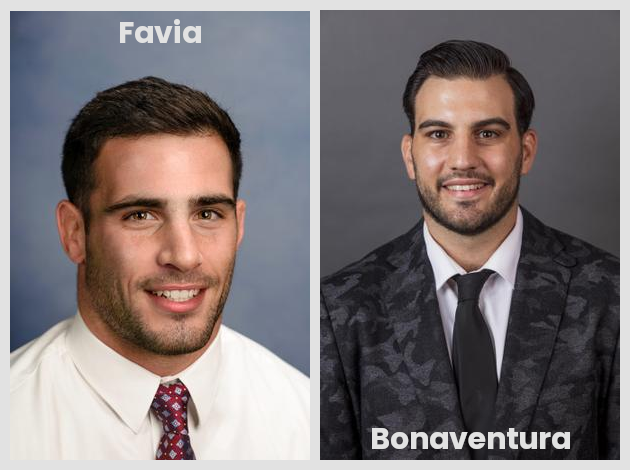
After ten seasons, Joe Favia has stepped down as head coach at Stevens Institute of Technology. He coached the Ducks to 116 dual meet wins, five regional championships, and 29 All-American finishes. The team finished in the top ten of the NCAA Championships five times. An alumnus of Stevens, Favia won over 100 matches, was named the Outstanding Wrestler at the 2013 Centennial Conference Championships, and earned All-American honors in 2012 and 2013.
He will be replaced by associate head coach Anthony Bonaventura. Bonaventura joined Stevens in 2015 after a season as graduate assistant as his alma mater Waynesburg University. He was a two-time NCAA qualifier for the Yellow Jackets and made the 174 lbs. NCAA final in 2014. In addition to coaching, he hosts the D3 Nation podcast along with his brother Gennaro.
Assistant Wrestling Coach,Intramural Coordinator,Full Time Classification: Exempt, Full time, 12-month Department/Division: Athletics, Student Affairs Reports To: Associate Vice President and Executive Director of Intercollegiate Athletics and Head Wrestling Coach
About King’s King’s College is a Catholic institution of higher education animated and guided by the Congregation of Holy Cross. King’s pursues excellence in teaching, learning, and scholarship through a rigorous core curriculum, major programs across the liberal arts and sciences, nationally accredited professional programs at the undergraduate and graduate levels, and personal attention to student formation in a nurturing community. We offer competitive total rewards, tuition remission for employees and their dependents, 403(b) plans, and generous paid-time-off and holidays. Our culture is driven by our commitment to our mission, our community and our friendly, knowledgeable faculty and staff.
EEO Statement King’s College does not discriminate in employment on the basis of race, color, religion, sex (including pregnancy and gender identity), national origin, political affiliation, sexual orientation, marital status, disability, genetic information, age, parental status, military service, or other non-merit factors. We celebrate diversity by fostering a welcoming and inclusive environment where each member of King’s College feels respected with a sense of belonging.
Job Function The Assistant Coach is responsible for assisting the Head Coach with organizing and administering all aspects of the College’s NCAA Division III program. This individual will develop a positive and transformational environment that fosters academic and athletic success that is consistent with the mission of the College, its Catholic identity, and the values of the Congregation of Holy Cross. This individual will be responsible for organizing a robust intramural program for the general student body.
Essential Elements
Actively recruit qualified student athletes that meet the academic standards and profile of the College; identify potential student athletes through off campus recruitment and coordination of on campus visits.
Assist Head Coach to create and sustain an atmosphere that promotes academic, athletic, and personal growth resulting in the overall success of student athletes.
Possess the expertise and ability to coach a specific skill set designated by the Head Coach.
Assist Head Coach to facilitate and implement opportunities that promote cultural diversity and inclusion within the program (racial, ethnic, gender, sexual orientation, national origin, and religion).
Support initiatives of the Monarch Athletic Fund (MAF) and organize fundraisers that supplement the operating budget.
Possess strong organizational and communication skills with the ability to manage multiple tasks at once. Function as a collegial team member by collaborating with all members of the King’s College community, especially Athletics, Residence Life, Dining Services, and other departments on campus, including participation in campus events.
Adhere to all NCAA and conference rules and regulations.
Coordinate a robust academic year long intramural program that promotes increased engagement of our student body.
Work collaboratively with the Programming Board, and Wellness Committee to coordinate recreational offerings.
Oversee the administration of intramurals including managing the budget, purchasing of equipment, and recruiting and supervising student workers.
Provide supervision for safety when monitoring any recreational or intercollegiate activity in any King’s facility.
Manage a secondary administrative duty as assigned by the AVP and Executive Director of Intercollegiate Athletics.
Required Skills, Training, and Expertise
Bachelor’s degree awarded from an accredited college or university (minimum credential).
Demonstrated coaching success at the NCAA level with progressive responsibilities.
First Aid, CPR and AED certification.
Ability to operate a motor vehicle with a good driving record and be approved by the College’s insurance carrier and Human Resources Department. This includes holding a valid US Driver’s License.
Computer proficiency and aptitude, including knowledge and use of Microsoft Office, Slate or similar systems, and various recruiting and game editing programs.
Demonstrated supervisory and management skills.
Valid Clearances, including PA State Police, Child Abuse, and FBI Fingerprints are required.
Physical Conditions Fluid work environment that varies greatly depending on time of year. High volume of work hours is required during the competitive season. Practices, games and recruiting efforts require consistent night and weekend work. Travel on charter buses and vans occurs often. Individuals will need to actively move during practices and games.
Arcadia University has named David Stevens as the first head coach for men’s wrestling in school history. Stevens spent the past season at Delaware Valley and was a graduate assistant coach at Messiah from 2021-2023. He graduated from Messiah in 2021 and was an NCAA qualifier for the canceled 2020 championships before placing 7th the following year at the NWCA DIII tournament.
Arcadia will begin competition in the 2025-2026 season as part of the Middle Atlantic Conference. Executive Director of Athletics Brian Granata said of the hire, “We are very excited to welcome Coach Stevens into the Arcadia Athletics family and look forward to watching him grow our men’s wrestling program from the ground up. Stevens has a deep understanding of the landscape of wrestling in our geographical region and is well-versed in the MAC from his time as a student-athlete and coach within the conference. His passion for the sport and vision for developing a new program was evident from the first day we met him.”